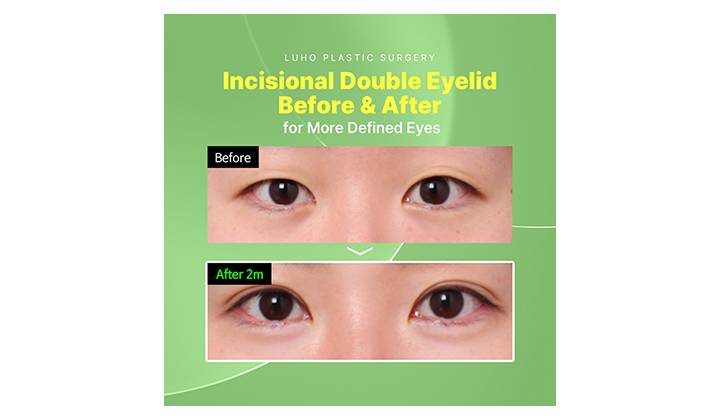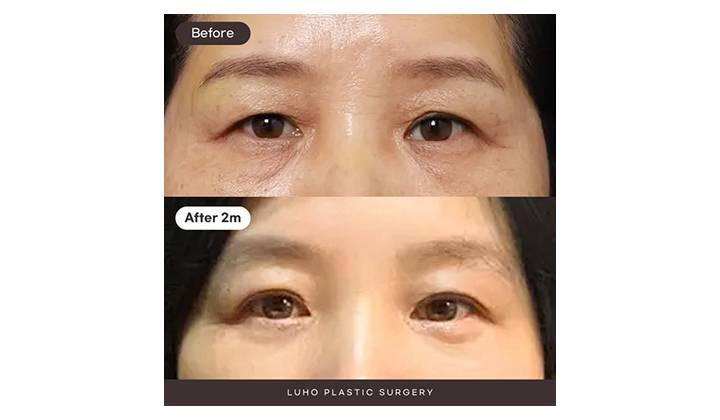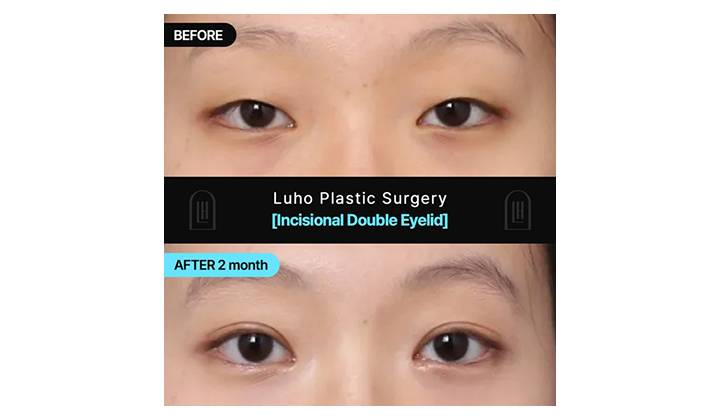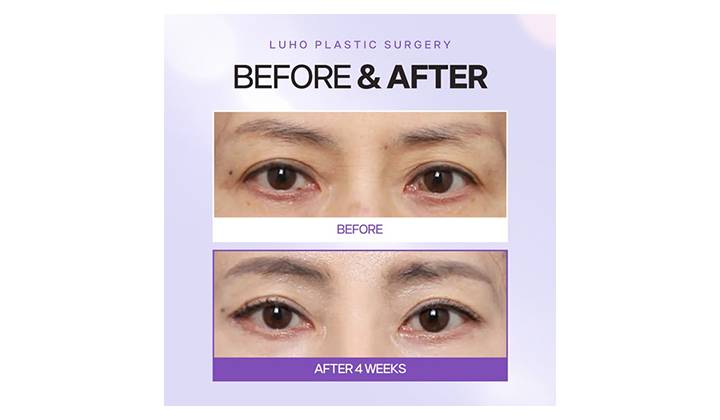

Many people expect sharper,
more defined eyes after double eyelid surgery,
but sometimes the swelling doesn’t subside
even after a long period, making the eyes look thick or puffy.
This can lead to stress and dissatisfaction with the results.
In some cases, the eyes may even look more stuffy or artificial,
and the folds don’t crease naturally when smiling,
causing the overall impression to seem unnatural.

"What Are Sausage Eyes?"
“Sausage eyes” refer to double eyelid folds
that appear excessively thick or overly artificial.
The term comes from how the upper eyelid can look like
a thick band placed on top of the eye.
While individual differences exist,
the following characteristics typically fall under sausage eyes:
- Double eyelid folds higher than 8–10 mm
- Creases that look too deep
- Upper eyelashes that appear lifted or pushed upward

"Causes of Sausage Eyes"
Sausage eyes are not caused solely by surgical error.
Instead, multiple factors often work together.
- Excessive fat removal or incision
- Double eyelid line set too high
- Adhesions forming at the surgical site
- Eye design that doesn’t match the person’s facial structure
Of all these, the most common underlying reason is
a design that does not sufficiently consider the eye’s anatomy.
Since the causes vary greatly from person to person,
a precise diagnosis and comprehensive assessment
are essential before determining the direction of revision surgery.

"When Is Revision Surgery Necessary?"
Although sausage eyes may improve over time,
if several months pass with no visible change
or if the eyelid crease looks uneven or bumpy when you close your eyes,
revision surgery may be worth considering.
You should especially consult a specialist if you notice:
*Significant asymmetry
*Only one side of the double eyelid has come undone
*A foreign-body sensation when opening your eyes
These may indicate structural issues requiring professional evaluation.

"Important Points to Know Before Revision Surgery"
Revision surgery requires
more delicate judgment than the first procedure.
The surgeon must consider the incision area, scarring, fat condition,
and degree of adhesion when planning the design.
Timing also matters—revision should be done
at least six months after the previous surgery.
Operating before the tissue has fully healed
increases the likelihood of unstable results.

"Checklist for Choosing a Revision
Specialist Near Sinsa Station"
When selecting a clinic, make sure to review the following:
- Does the specialist have extensive experience with revision cases?
- Is the diagnosis and correction plan clearly explained?
- Do they offer 1:1 consultation and a simulation process?
- Is the aftercare schedule thorough and well-organized?

"Final Thoughts"
Correcting sausage eyes isn’t just
about resolving cosmetic dissatisfaction.
It also involves considering the functional aspects of the eyes,
facial expressions, and overall impression.
By finding a medical team that analyzes the cause accurately
and presents a clear correction plan,
you can restore a sharper and more natural-looking appearance.