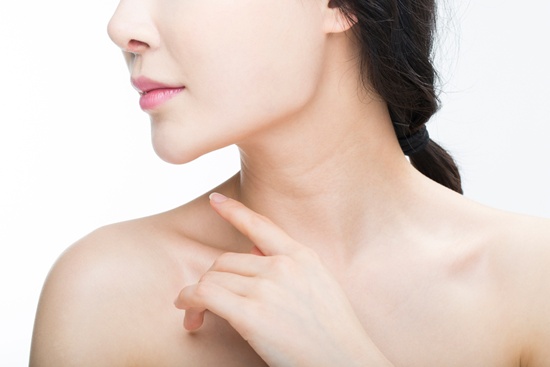
'I want a slim-looking jawline
without having to hide it with my hairstyle.'
Even when you try to cover it with your hair
or tilt your chin as much as possible for photos,
a wide facial outline can be difficult to conceal.
Especially when wearing your hair up,
an angular jawline can create a strong impression
or make the face appear larger than it actually is.
Many people assume this is caused by fat,
but in many cases, the true cause is the masseter muscle.
When chewing force is strong
or teeth clenching becomes habitual,
the masseter muscle gradually thickens,
eventually forming a square jawline.
So how can this be addressed?
The answer is Square Jaw Botox at Seoul.
By relaxing muscle tension
and reducing muscle thickness,
this treatment softens the facial outline
and helps create a natural, balanced contour.
But how do you choose the right clinic
to achieve satisfying results?
"Why Square Jaw Botox
Changes the Facial Line"
Botox works by suppressing excessive activity
of the masseter muscles,
gradually making them slimmer.
By temporarily blocking nerve signals,
it reduces excessive muscle contraction.
As the amount of muscle used
in daily activity decreases,
the enlarged masseter muscles slowly shrink,
narrowing the lower face.
This naturally creates a more refined jawline.
Changes typically begin around two weeks after treatment
and become more noticeable within one to two months.
"There Is No Such Thing
as a Naturally Square Jaw"
There are three main causes of a square jawline:
1. Lifestyle habits
• Stress, habitual teeth clenching,
and frequent consumption of hard foods
can cause muscle hypertrophy
2. Excess fat in the jaw area
• Fat under the jaw creates a blunt contour
• This is referred to as the “fat-type” jaw
3. Developed jawbone structure
• Known as the “skeletal type,”
where the jawbone angle itself is prominent
Among these, muscle-type square jaws
respond most effectively to Botox treatment.
That’s why an accurate diagnosis
of the underlying cause
is essential before proceeding.
"Three Key Considerations
Before Treatment"
1. Dosage
• Using the same amount for every patient
can lead to inconsistent results
• Dosage must be adjusted based on muscle thickness,
hypertrophy direction, and asymmetry
2. Avoiding side effects
• Excessive injection can cause fatigue
during chewing
• Proper design is needed to avoid
interfering with normal jaw function
3. Goal setting
• The focus should not be solely on reducing jaw size
• For natural results, the overall face shape,
cheekbones, and chin must be considered together
Carefully evaluating these three factors
helps ensure satisfying outcomes.
"Consistency Extends Longevity"
Square jaw Botox is not permanent,
so maintaining proper treatment intervals is important.
For the first two to three sessions,
treatments should be performed consistently
at approximately three-month intervals
to stabilize muscle reduction.
If this phase is missed,
the muscles may enlarge again,
and results can become unstable.
After maintaining regular intervals,
continuing treatment every four to six months
can produce long-lasting, natural-looking results.
How Facial Balance Transforms Your Impression
Square jaw Botox does not involve shaving bone,
but rather managing facial balance.
It requires minimal time
and allows for a quick return to daily life.
With consistent treatment,
muscle changes stabilize,
making it possible to maintain a naturally slimmer jawline
over an extended period.
Ultimately, the most important factor
is not aggressive correction,
but choosing an approach
that suits your individual features.
Through careful consultation
based on your face shape and muscle distribution,
experience the beginning of a well-balanced transformation.