"Low Nose, Small Change—Big Difference"
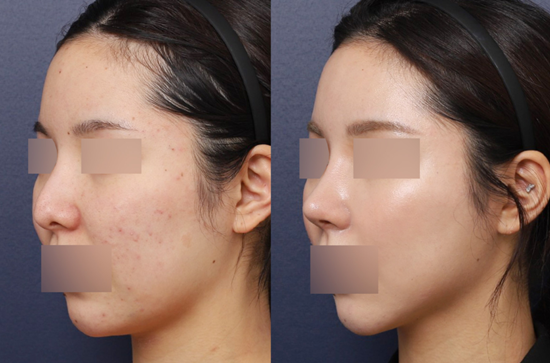
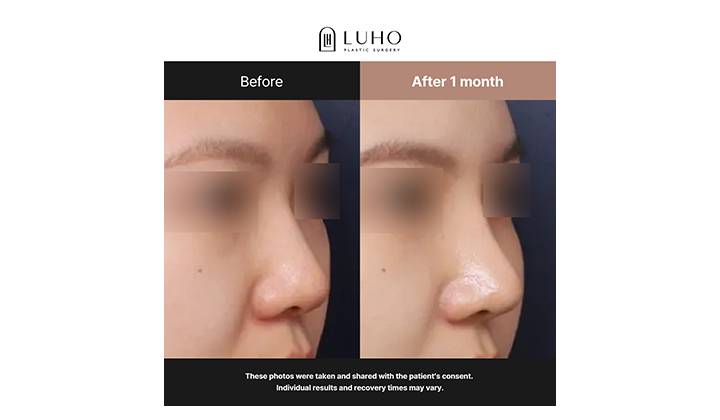
'Just a slightly low nose bridge can change
the impression of your face.'
Some people have distinct facial features overall,
but the nose appears flat because the bridge is low.
Others wonder whether nose augmentation
alone can create more dimension.
From the side view,
the nose is a major factor that completes
the impression of the face.
Even if the eyes and lips are well-defined,
a low nasal bridge can make the face look flat,
which is why many people visit plastic surgery clinics in Seoul Sinsa
However, because the height and shape of the nose greatly
affect facial harmony,
the goal is not simply to make it higher.
The key is to find the proportions
and lines that suit your face.
To minimize complications,
delicate surgical technique
and careful selection of methods are essential.
"Methods for Correcting
a Low Nose Bridge"
In most cases,
both the nasal bridge
and the tip are corrected together.
Here is the process used at Luho Plastic Surgery
for low nose augmentation:
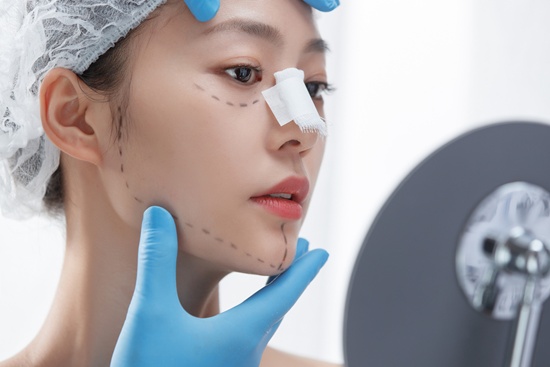
1) Creating space for the implant
An incision is made, and the nasal bone
and periosteum are dissected to create a pocket for the implant.
2) Inserting a customized implant
The implant is shaped according to the desired design
and inserted into the bridge and tip areas.
3) Shaping the nose line
The tip is refined to create an ideal nasal contour.
The most important factor here is structural stability.
If the tip does not have enough internal support,
its shape may change over time or the tip may droop.
Therefore, the patient’s skin thickness, cartilage condition,
and overall facial balance must be evaluated comprehensively
when designing the structure.
"Open vs. Closed Rhinoplasty"
Low nose surgery is performed using either an open or closed approach.
*Open Approach
- Incision location: Along the inside of the nostrils and across the columella
- Advantages: Provides clear visibility and allows precise implant placement
- Disadvantages: Longer-lasting swelling and potential visible scarring
*Closed Approach
- Incision location: Inside the nose
- Advantages: No visible external scar
- Disadvantages: Limited visibility may make detailed correction difficult
The choice depends on the correction required
and the individual’s facial proportions.
"Concerns About Complications..."
Many patients express concerns such as:
'I’m worried about potential complications.'
Possible complications from low nose augmentation include infection,
capsular contracture, asymmetry, and reduced sensation.
Capsular contracture occurs when the tissue
inside the nose tightens around the implant, causing hardening.
In severe cases, this can lead
to a crooked nose or an upturned appearance.
This often results from setting the nose too high,
ignoring skin tension, or undergoing surgery with insufficient technique.
To prevent complications,
a 3D CT scan should be used to thoroughly analyze the patient’s facial structure
and select the appropriate materials and surgical method.
Systematic post-operative care is also essential.
"Materials Used for Low Nose Augmentation
at Luho Plastic Surgery"
To ensure stable and natural results,
the following materials are typically used.
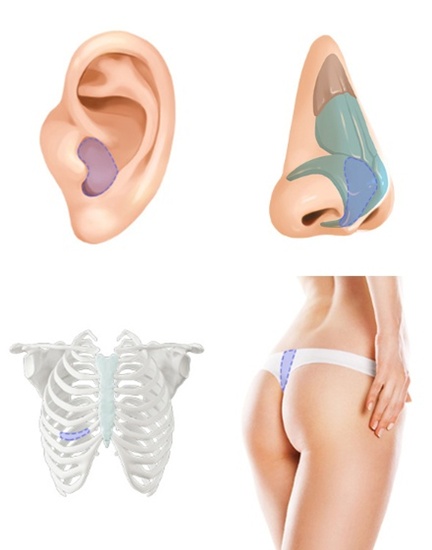
Whenever possible, autologous tissue is selected.
1) Ear cartilage
2) Septal cartilage
3) Rib cartilage
4) Dermis harvested from the hip area
The right material must be chosen based on
the patient’s facial structure, skin thickness, and desired nose shape,
and the surgeon’s expertise is crucial in making that decision.
"Subtle Yet Harmonious Improvement:
Low Nose Augmentation"
When expert planning
and stable surgical execution come together,
the central line of the face is refined
and a more defined impression is created.
The core goal is to achieve beauty
without an obvious “operated” look.
With skilled medical planning focused
on structural stability and aesthetic balance,
you can achieve the right harmony for your own face.